Trending · Fact Check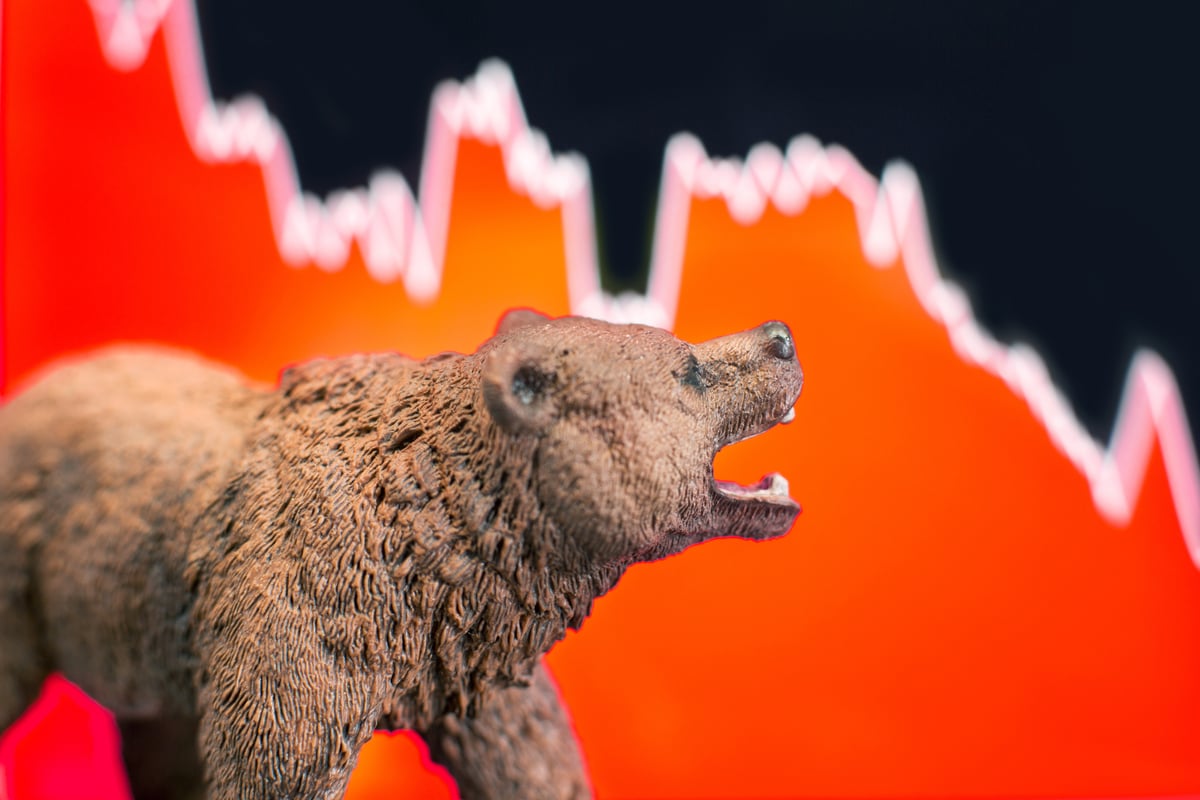
Investing in the S&P 500 ( ^GSPC +1.14% ) via a low-cost exchange-traded fund ( ETF ), like Vanguard's S&P 500 ETF ( VOO +1.12% ) , is a sound long-term strategy. The benchmark index has generated an average annual total return of about 10% since its inception in 1957, outperforming most individual stocks and actively managed funds over the long term. But since 1957, there have been ten official bear markets -- peak-to-trough declines of at least 20% -- which occurred every six to seven years.
The average bear market only lasts nine to ten months, but those steep downturns drive many investors out of stocks. So if you expect the next bear market to happen in the near future, the best move you can make is to sit still and weather the storm. Let's see why that crucial investing decision could make or break your portfolio.
Image source: Getty Images. Why should you resist the urge to sell? In 1987, the S&P 500 suffered a peak-to-trough decline of 33.5% from August to December -- including the "Black Monday" crash on Oct. 19.
From March 2000 to Oct. 2022, the S&P 500 plunged 49.1% as the dot-com bubble burst and the 9/11 attacks derailed the economy. From Oct. 2007 to March 2009, the Great Recession caused the S&P 500 to sink 56.8%. From Feb. to March 2020, the pandemic caused a 33.9% drop.
From Jan. to Oct. 2022, the S&P 500 fell 25.4% as the Fed aggressively hiked its benchmark rates to tame inflation. Index S&P 500 Index Today's Change ( 1.14 %) + 85.95 Index Level 7,637.76 But since the beginning of 1987, the S&P 500 has still generated a total return of 6,377%. It's also delivered total returns of 669% and 1,112%, respectively, since the first days of 2007 and 2009.
Investors who quit the market too early missed out on those massive gains. Why should you stay invested? The S&P 500 is also rebalanced quarterly to include only the 500 largest U.S. companies.
By only hosting the winners and pruning the losers, you'll always be exposed to the long-term growth of the U.S. economy. That passive strategy is smarter than rotating your cash to CDs, T-bills, and other fixed-income investments simply because interest rates are rising. That same logic also applies to individual stocks you're bullish on.
Warren Buffett once told investors that if you buy a stock, you should be prepared to "have it go down 50% -- or more -- and be comfortable with it." If you're not, you could leave a lot of money on the table. Leo Sun has no position in any of the stocks mentioned. The Motley Fool has positions in and recommends Vanguard S&P 500 ETF.
The Motley Fool has a disclosure policy .
Source: The Motley Fool